
PATHWAYS
Routes into care.
Funded routes into paid care work, for young people and adults outside employment. The pathway covers getting people ready, real placement experience, and first-job support designed to land people in roles that stick.

The need, and our response
Vacant posts across adult social care on an average day. The structural gap our pathways exist to close. Source: Skills for Care.
Annual cost of delayed hospital discharges. Source: NHS England. A significant share is linked to out-of-hospital capacity constraints, including social care and care home availability.
Training linked directly to a real placement and a first role, not a classroom course that ends in a certificate.
Young people not in education, employment or training: a pool of potential carers a supported route can reach. Source: ONS / DWP.
Individual carers placed into paid shifts since launch, cumulative across all provider partners.
The challenge
Care needs new routes in.
Not enough people are coming into care. That leaves vacancies unfilled, drives up the cost of cover, and adds to the pressures behind delayed hospital discharges. It also makes steady, high-quality care harder to sustain for the people who rely on it.
We don't train people in isolation. We design pathways that end in paid, sustained roles, because that's where the system outcome actually lives. Joel Dawson · We Are Care
Our pathways are built around conversion into paid work rather than certification, with training linked directly to jobs. Transitional support, in-work check-ins and progression routes keep people in once they've started.
This is where We Are Care aligns most closely with national priorities: youth employment, NHS discharge support and building a home-grown care sector, and where we make the case for funding to bring more people in and keep them in.
Our approach
How we design them
We measure ourselves on how many people land in paid roles, not how many complete a course.
Bringing someone in is half the work. Keeping them in their role is the other half. Pastoral support, early intervention and progression routes are designed in from day one.
We report outcomes properly to funders and commissioners, so the results stand up to scrutiny.
Two routes
Two ways into care.
Pathways focuses on people not currently working in care. Young people looking for a meaningful first step, and adults returning to work or changing direction into a sector with real demand.

Youth into care
A first step into meaningful work.
For young people who need a supported route into work. We handle confidence-building, care-readiness, training, checks, real care-setting experience and early support, so suitable participants progress towards real roles.
Build a youth route
Back into work
A route back through care.
For adults returning to employment or changing direction. We identify transferable skills, manage the readiness and compliance layer, and support people through first exposure to care and into paid work.
Build a return-to-work routeHow it works
From referral to retention.
A six-phase model. We prepare people properly, place them where they'll succeed, and support them end-to-end from first conversation to first job and beyond. A feedback loop runs through it. We see what's working, intervene where it isn't, and refine the model as we learn.
The model is built to produce measurable employment and care-capacity outcomes, tracked at every stage.
End-to-end ownership of the journey, real working relationships with care providers, and the compliance and training capability we run ourselves. Toby Gavin · We Are Care

Identify and engage
Reaching people outside work, before competition for roles starts.

Care-readiness, not just certification
Real preparation for the work, not a paper qualification.

Real care-setting experience
Practice exposure in real care settings. Providers see participants in context. Participants find out whether care is right for them before they commit.

Supported entry
Safeguarding-conscious onboarding into role, not a parachute.

First-job durability
Success measured at 30, 60 and 90 days in role, not at hire.

Continuous support and learning
End-to-end visibility, early intervention where it's needed, and a feedback loop we use to refine the model. Assisted by Baton.
Assurance
Compliance, risk and assurance. We own it.
We manage the assurance work that comes with bringing new people into care safely. Identity, right to work, address, DBS administration where appropriate, training records, certificates, readiness reviews and risk flags are handled end-to-end. A participant who reaches a care setting is ready and accounted for. Care delivery and supervision remain with the registered provider; everything that needs to be true before that, sits with us.
Host partnership
Hosts make pathways work.
Pathways needs CQC-registered providers willing to host care-setting experience. Hosting is where preparation turns into readiness, and readiness turns into a placement. In return, providers get a lower-risk look at suitable future workers, feedback at each stage of the journey, and interview opportunities where there's a fit and an available role.
Talk to us
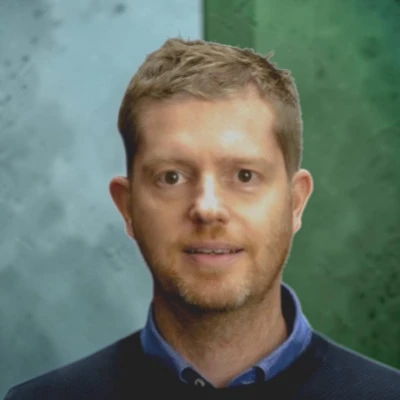
Spends his week with care homes, care groups and provider networks.
Book a 20-minute intro callFor the person receiving care
More familiar faces.
Stable workforces matter for the people being cared for. Pathways helps providers build local teams that stay, which gives the people they care for familiar faces, stronger trust, better understanding of their routines, and more consistent support. For them, and the people around them.
Let's talk
Let's talk.
Tell us about the route you want to build or the outcomes you need to evidence. We'll listen first, then walk through how we can help.